Entire wedding party's flowers
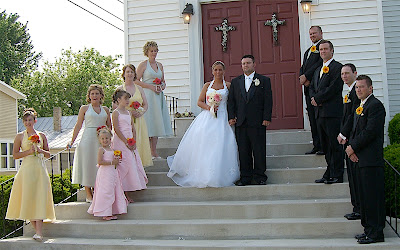
My friend's sister got married and I did all the flowers for the wedding. This is the entire wedding party on the steps of the church after the ceremony.
Tips and Tricks for a Coordinated, Stress-Free Wedding Day
Wedding flowers are often planned one arrangement at a time.
First comes the bridal bouquet. Then the bridesmaid bouquets. Later, someone remembers the groom’s boutonniere, the mothers’ corsages, the fathers’ boutonnieres, and the flower girl’s petals.
By the final planning week, the flower order may include dozens of small pieces, each meant for a different person.
That is where confusion begins.
A boutonniere is placed on the wrong jacket. A grandmother receives a wrist corsage even though she requested a pin-on style. The best man leaves his flowers in the hotel refrigerator. The maid of honor holds the bride’s bouquet during the ceremony but has nowhere to place her own.
None of these problems is especially serious, but together they can make the wedding morning feel rushed.
Planning flowers for the entire wedding party requires more than choosing colors and favorite blooms. The flowers need to suit each person’s role, clothing, comfort, and schedule. They also need to be labeled, transported, distributed, and attached correctly.
A coordinated flower plan does not mean that everyone must carry or wear the same arrangement.
It means each floral piece feels connected to the wedding while still working for the person receiving it.
Start With a Complete People List
Before discussing flower varieties, create a list of everyone who may need flowers.
A typical list might include:
Bride
Groom
Bridesmaids
Maid or matron of honor
Groomsmen
Best man
Mothers
Fathers
Stepparents
Grandparents
Flower girl
Ring bearer
Ushers
Officiant
Readers
Ceremony musicians
Special family members
Personal attendants
Not every person needs flowers.
The purpose of the list is to prevent accidental omissions and make intentional decisions.
Some couples give flowers only to the wedding party and parents. Others include grandparents, siblings, ceremony readers, or anyone participating in the processional.
There is no universal rule.
The best approach is to decide who should be visually recognized and who would appreciate wearing or carrying flowers.
Give Each Person the Right Type of Flower
Different roles usually call for different floral pieces.
The bride may carry the largest or most detailed bouquet. Bridesmaids usually carry smaller versions with fewer premium flowers or a simplified color palette.
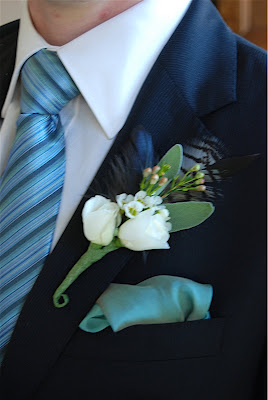
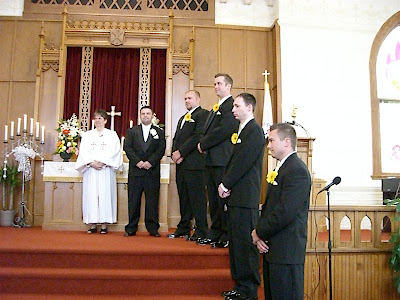
The groom typically wears a distinctive boutonniere. Groomsmen, fathers, and ushers may wear simpler coordinating versions.
Mothers and grandmothers may wear wrist corsages, pin-on corsages, or carry small nosegays.
Flower girls may carry petals, a flower basket, a miniature bouquet, a floral hoop, or a small pomander.
Ring bearers may wear a lightweight boutonniere, but very young children may be more comfortable without one.
The flower type should match the person’s clothing and comfort.
A delicate silk dress may not support a heavy pin-on corsage. A person using a cane or walker may not want to manage a handheld bouquet. Someone with sensitive skin may dislike a tight wrist corsage.
Ask rather than assume.
Create a Floral Hierarchy
Wedding-party flowers look most coordinated when there is a clear hierarchy.
The bride’s bouquet should feel like the main floral piece. It may include more flowers, a larger shape, premium blooms, trailing ribbon, or a slightly different color balance.
The bridesmaid bouquets should support the bridal bouquet without competing with it.
The maid of honor can carry a bouquet that is slightly different from the others. It may include an additional flower, a different ribbon, or a little more greenery.
The groom’s boutonniere should coordinate closely with the bridal bouquet.
The groomsmen’s boutonnieres can use one smaller flower or a simplified combination. The best man’s boutonniere may include one extra detail to distinguish him.
Parents’ and grandparents’ flowers should feel connected to the overall palette but do not need to match the wedding party exactly.
This layering creates visual order.
When every bouquet and boutonniere is equally large or detailed, the bride and groom can disappear into the group.
Coordinate Without Matching Everything
Perfect matching is not necessary.
In fact, wedding flowers often look more natural when the pieces are coordinated rather than identical.
The bridal bouquet may include ivory roses, blush ranunculus, white lisianthus, and greenery.
The bridesmaids may carry mostly white roses and greenery with only a few blush flowers.
The groom may wear one blush rose with a small green accent.
The groomsmen may wear white spray roses or small lisianthus blooms.
The mothers may receive corsages made with ivory flowers and a ribbon that complements their dresses.
The connection comes from repeated colors, flower varieties, greenery, ribbon, or overall style.
Not every person needs every flower used in the wedding.
Consider Clothing Before Choosing Flowers
Flowers are worn directly against clothing, so the outfit matters.
Ask for the colors of suits, dresses, uniforms, and formalwear.
A dark red rose may look beautiful against a navy suit but disappear against a burgundy jacket. A white boutonniere may stand out well on black but blend into an ivory dinner jacket.
Corsages require even more planning.
A pin-on corsage can pull or damage delicate fabrics. Beaded dresses, lace, thin silk, and heavily structured necklines may make pinning difficult.
A wrist corsage avoids pin damage, but it may interfere with bracelets, watches, sleeves, or mobility.
A small handheld nosegay can be an elegant alternative for mothers and grandmothers.
Ask each recipient what they would prefer.
A flower is not a thoughtful gift if it makes the person uncomfortable all day.
Keep Boutonnieres Light
Boutonnieres are small, but they can become surprisingly heavy.
Large roses, thick greenery, berries, multiple flowers, and decorative accents may pull the lapel forward or rotate sideways.
Choose sturdy but lightweight materials.
Good boutonniere flowers may include:
Spray roses
Small roses
Mini carnations
Lisianthus blooms
Ranunculus
Orchids
Small chrysanthemums
Waxflower
Statice
Small greenery accents
The groom’s boutonniere can be slightly larger, but it should still sit securely.
Ask the florist whether the boutonnieres use pins, magnets, clips, or another attachment method.
Magnets can be helpful with some fabrics, but they may not be suitable for everyone, particularly guests with certain medical devices. Confirm any health concerns before using magnetic attachments.
Label Every Floral Piece
One of the easiest ways to prevent wedding-day confusion is to label everything.
Each bouquet, boutonniere, and corsage should have a name or role attached.
Examples include:
Bride
Maid of Honor
Bridesmaid—Anna
Groom
Best Man
Father of the Bride
Mother of the Groom
Grandmother—Pin-On Corsage
Officiant
Do not label a box only as “Men’s Flowers” or “Family Flowers.”
Someone still has to determine which piece belongs to which person.
Ask the florist to organize the flowers by group:
Bridal party bouquets
Boutonnieres
Parent flowers
Grandparent flowers
Ceremony flowers
Flower-child items
A clear inventory list should be placed on top of the delivery.
Assign a Flower Coordinator
The bride and groom should not be responsible for distributing flowers on the wedding morning.
Choose one person to receive and manage the floral delivery.
This may be:
Wedding planner
Day-of coordinator
Trusted relative
Maid of honor
Best man
Personal attendant
Venue coordinator
The flower coordinator should confirm:
All pieces arrived
Names and labels are correct
Bouquets are placed in water
Boutonnieres remain cool
Corsages are delivered to the right room
Ceremony flowers reach the correct location
Rental containers are tracked
Give this person the florist’s contact information and the final flower list.
A missing boutonniere is much easier to solve two hours before the ceremony than ten minutes before the processional.
Distribute Flowers at the Right Time
Flowers should not be handed out too early.
Bouquets should remain in water until photographs or the ceremony. Boutonnieres and corsages should stay cool and protected until people are dressed.
Putting on flowers before eating, traveling, or hugging several relatives increases the chance of damage.
A practical schedule may look like this:
Bouquets delivered and checked
Wedding party gets dressed
Photographer captures detail photos
Boutonnieres and corsages attached
Bouquets removed from water
Personal flowers photographed
Wedding party leaves for ceremony
Flower children should receive their baskets or small bouquets shortly before the ceremony. Young children may drop, crush, or dismantle flowers if they receive them too early.
Know How to Pin a Boutonniere
Boutonnieres are traditionally worn on the left lapel, near the heart.
The flower should sit upright with the bloom near the lapel’s widest section.
If using pins, insert them from behind the lapel so most of the pin remains hidden. Use enough support to prevent the boutonniere from rotating.
A heavy boutonniere may require two pins.
Assign one person who knows how to attach them. This may be the florist, planner, photographer’s assistant, or experienced family member.
Do not expect every groomsman to pin his own correctly.
Bring extra pins and floral tape.
Plan for Bouquet Hand-Offs
During the ceremony, the bride usually hands her bouquet to the maid or matron of honor.
That person may already be holding her own bouquet.
Practice the handoff during the rehearsal.
The maid of honor can hand her bouquet to the next bridesmaid, who may pass hers down the line if necessary. Another option is placing the bridesmaid bouquets in discreet floor vases or holders near the front.
The bride should receive her bouquet again before walking back down the aisle.
This simple movement is easy to forget when everyone is nervous.
The officiant or planner can add the bouquet handoff to the ceremony notes.
Protect Flowers During Photography
Wedding-party flowers appear in many photographs, but constant handling can damage them.
Ask the photographer when the bouquets are needed and when they can be returned to water.
Avoid placing bouquets directly on wet grass, dirty pavement, or hot stone.
Do not lay boutonnieres face-down on a table.
During outdoor summer photographs, keep a vase or bucket nearby. Assign someone to carry water and return bouquets between photo groups.
The bridesmaids should hold their bouquets at a consistent height, usually near the waist. If everyone holds flowers differently, group photographs can look uneven.
The bride’s bouquet may be positioned slightly lower or angled forward to show the flowers and the dress.
Prepare for Allergies and Sensitivities
Before finalizing personal flowers, ask whether anyone has flower, pollen, fragrance, or skin sensitivities.
Strongly scented flowers may be difficult for someone wearing them close to the face.
Some greenery and sap can irritate the skin.
Flowers with heavy pollen may stain clothing or trigger allergies.
Possible solutions include:
Using low-fragrance flowers
Removing pollen-bearing anthers
Choosing ribbon-wrapped stems
Using artificial flowers for one person
Replacing eucalyptus with less fragrant greenery
Offering a small bouquet instead of a corsage
Skipping flowers for that person
Consistency is less important than comfort and safety.
Choose Durable Flowers for Children
Flower girls and ring bearers need flowers that can survive movement.
Young children may swing baskets, touch petals, sit on bouquets, or leave items on the floor.
Use sturdy flowers and lightweight designs.
Good options may include:
Carnations
Mini roses
Chrysanthemums
Baby’s breath
Statice
Artificial petals
Silk flowers
Greenery hoops
Ribbon wands
Avoid heavy glass containers, sharp pins, berries that resemble food, and toxic plant materials.
For very young children, ribbon wands or fabric petals may be safer and easier than fresh flowers.
Check whether the venue allows petals to be scattered. Some prohibit fresh petals because they can stain floors or create a slipping hazard.
Give Parents and Grandparents Options
Parents’ and grandparents’ flowers are often treated as an automatic tradition, but preferences vary.
Some people love corsages. Others find them uncomfortable or old-fashioned.
Offer a choice among:
Wrist corsage
Pin-on corsage
Small nosegay
Single flower
Boutonniere
Floral bracelet
No flowers
Grandparents may need lightweight options that are easy to manage.
Someone using a wheelchair, walker, or cane may prefer a pin-on flower instead of a handheld bouquet.
Consider vision, dexterity, mobility, and clothing.
The best choice is the one the person can wear comfortably without needing constant adjustment.
Prepare a Floral Emergency Kit
Personal flowers are exposed to movement, heat, hugs, seat belts, and clothing.
Keep a small emergency kit nearby.
Include:
Extra boutonniere pins
Floral tape
Safety pins
Small scissors
Paper towels
Clear tape
Replacement ribbon
Cotton swabs
Water tubes
A few backup flowers
Stain remover
Small vase or cup
Ask the florist to include spare blooms when possible.
A damaged groomsman boutonniere can often be replaced with one small flower and a piece of greenery.
Keep Flowers Cool and Hydrated
Heat is one of the biggest threats to wedding-party flowers.
Keep bouquets in water and store personal flowers in a cool room away from sunlight, heaters, kitchen equipment, and fruit.
Do not place flowers in a household refrigerator without checking the temperature and contents. Some refrigerators are too cold, and fruit can release ethylene gas that speeds flower aging.
Boutonnieres and corsages should remain in their protective boxes until needed.
Avoid leaving flowers inside a parked car.
For outdoor weddings, delay placement and distribution as long as possible.
Count Everything Twice
Before the final florist meeting, review the quantities.
Count people by name rather than category.
Instead of writing “eight boutonnieres,” list:
Groom
Best man
Five groomsmen
Father of bride
Father of groom
Officiant
That is ten, not eight.
Wedding parties change. A grandparent may decide to attend. A new usher may be added. A reader may need recognition.
Confirm the list two to four weeks before the wedding, then check it again during the final week.
Order one or two extra simple boutonnieres when the budget allows.
They can replace damaged pieces or be given to an overlooked family member.
Plan What Happens After the Ceremony
Wedding-party flowers can continue serving a purpose after the formal photos.
The bride may place her bouquet in a vase at the sweetheart table. Bridesmaid bouquets can decorate the guestbook table, bar, cake table, or restrooms.
Parent nosegays may be taken home.
Boutonnieres and corsages can be saved, pressed, dried, or photographed.
Assign someone to gather bouquets before guests leave. Otherwise, flowers may remain scattered around the venue.
If the bride wants bouquet preservation, arrange delivery or shipping in advance. The bouquet should not sit unattended for several days.
Let the Flowers Identify and Honor People
Personal flowers do more than add color.
They quietly identify the people closest to the couple.
The bride’s bouquet marks her place at the center of the floral design. The groom’s boutonniere connects him to her flowers. Bridesmaid bouquets create rhythm in the ceremony. Parent and grandparent flowers recognize family members whose support helped shape the day.
That meaning is most effective when the flowers are planned thoughtfully.
They should fit the people wearing them.
They should be light enough to carry, secure enough to stay in place, and durable enough to last through photographs and the ceremony.
They do not need to be large or expensive.
They need to be organized.
Create a complete list. Build a clear floral hierarchy. Label every piece. Ask about comfort and allergies. Assign someone to manage delivery and distribution. Practice bouquet handoffs and keep emergency supplies nearby.
When those details are handled before the wedding morning, the flowers can do what they were meant to do.
They can bring the entire wedding party together visually while allowing each person to feel recognized, comfortable, and ready to celebrate.
Comments